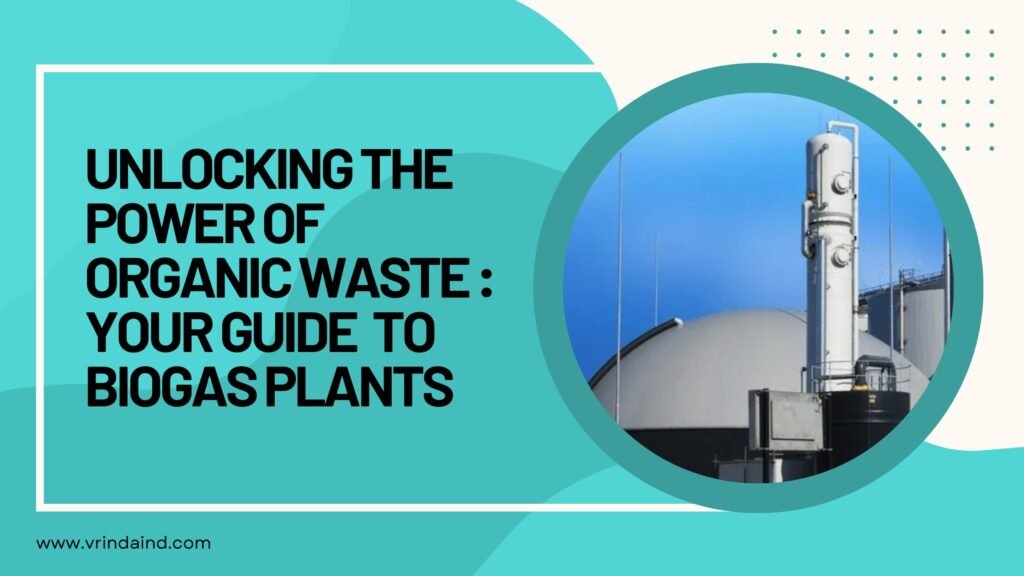
Transitioning to renewable energy is a significant capital investment. Whether you are a dairy farm owner, a municipal waste manager, or an industrial food processor, the success of a waste-to-energy project depends on meticulous planning and the right technical infrastructure.
At Vrinda Industries, we have helped dozens of clients move from initial concept to a profitable, operational facility. This guide outlines the five critical pillars of a successful biogas plant project.
1. Feedstock Assessment & Feasibility
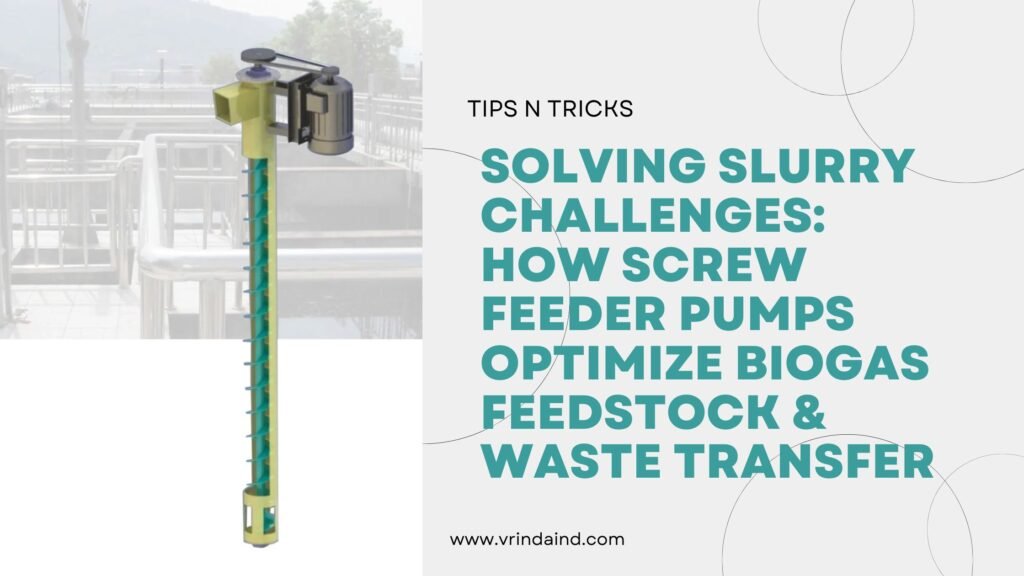
Moving waste into the digester is where many plants face operational hurdles. Standard pumps often fail due to the high viscosity and abrasive nature of organic slurries. For precise dosing and reliable movement of thick materials, industrial plants rely on specialized Roto Screw Pumps.
For feedstock with high solid content, a Screw Feeder Pump is essential to ensure a clog-free, continuous flow, which is the heartbeat of your anaerobic digestion process.
3. Optimizing the Digestion Process (Mixing)
Once the waste is inside the digester, it must stay in motion. Without proper agitation, the bacteria cannot access the nutrients, and your gas production will drop.
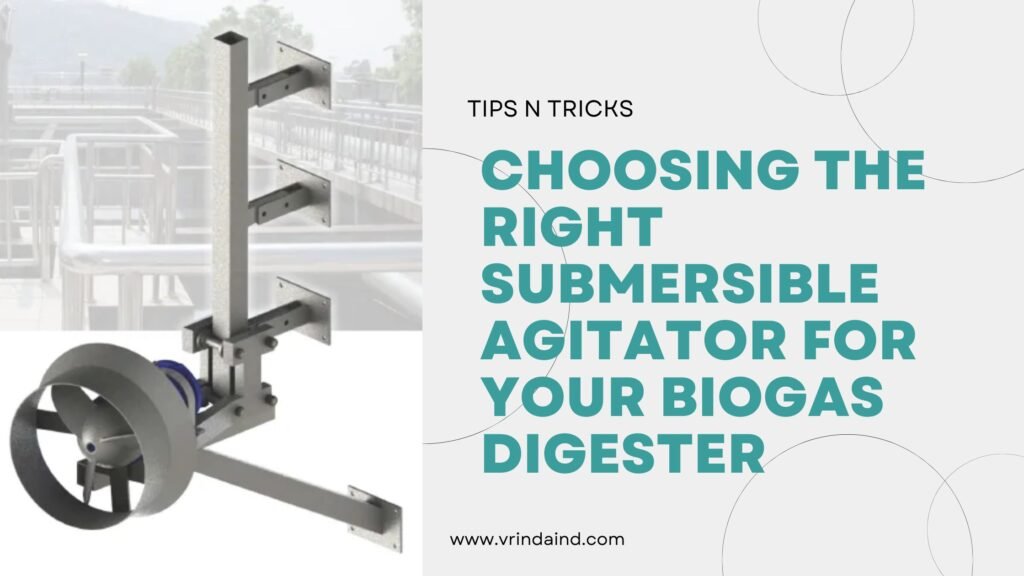
You must decide between different mixing technologies based on your tank size. While Submersible Agitators offer incredible flexibility for thick slurries, larger lagoons may require High Flow Agitators to prevent sedimentation. For a deeper look at the pros and cons, see our technical comparison on Submersible vs. Vertical Agitators.
4. Maximizing Byproduct Value
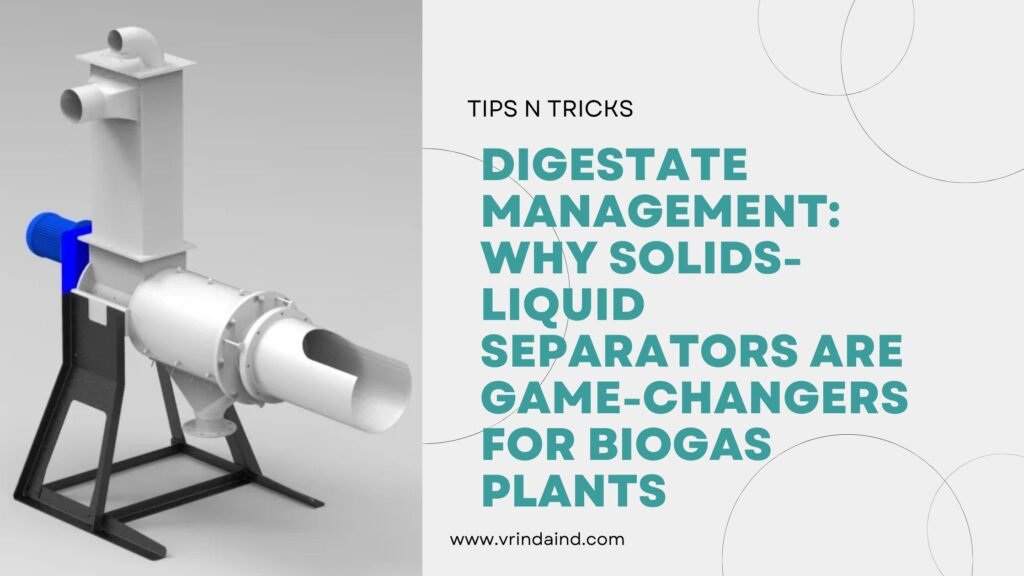
A biogas plant produces more than just energy; it produces digestate. This nutrient-rich material is a hidden revenue stream. By implementing Solids-Liquid Separators, you can create stackable bio-fertilizers and liquid irrigation nutrients, further reducing your carbon footprint and creating a circular economy on your site.
For a real-world look at how this works, read our Dairy Farm Case Study where waste was transformed into a profitable resource.
5. Long-Term Operations & Maintenance
The final pillar is sustainability through upkeep. An industrial plant is a 24/7 operation. Creating a strict biogas plant maintenance schedule is the only way to protect your investment and ensure your equipment reaches its maximum operational life.
Conclusion: Partnering for Success
Planning a biogas project is complex, but with the right manufacturing partner, it is a proven path to energy independence and environmental stewardship. Vrinda Industries provides the engineering expertise and high-performance equipment needed to turn your waste into value.

Are you ready to start your project feasibility study?
Contact the experts at Vrinda Industries today for a technical consultation and customized equipment proposal!