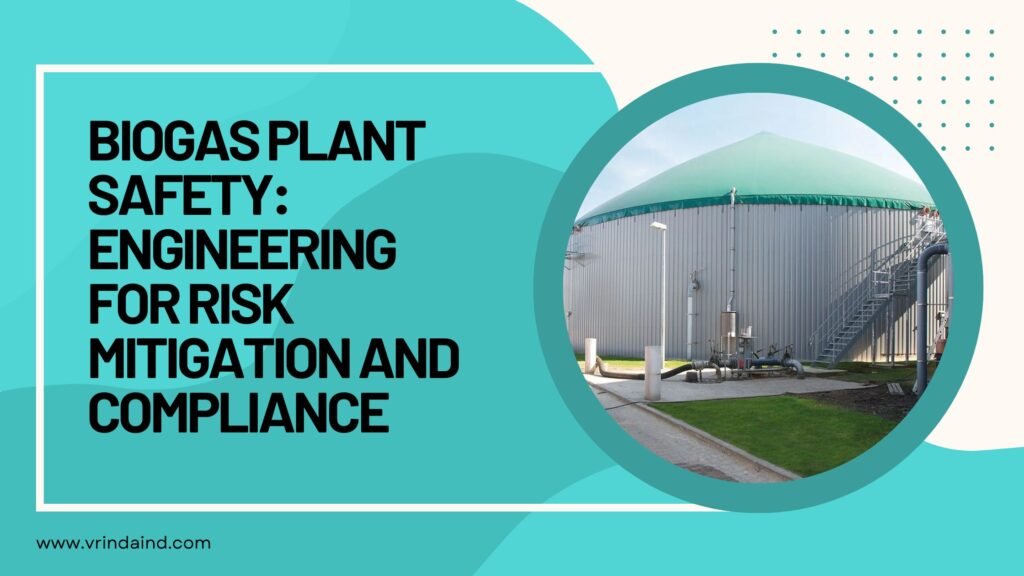
Operating an industrial biogas plant is a highly rewarding investment, but it involves managing biological, chemical, and physical risks. Because biogas is a mixture of methane (flammable) and hydrogen sulfide (H2S) (toxic), safety cannot be an afterthought.
At Vrinda Industries, safety is baked into our manufacturing process. From
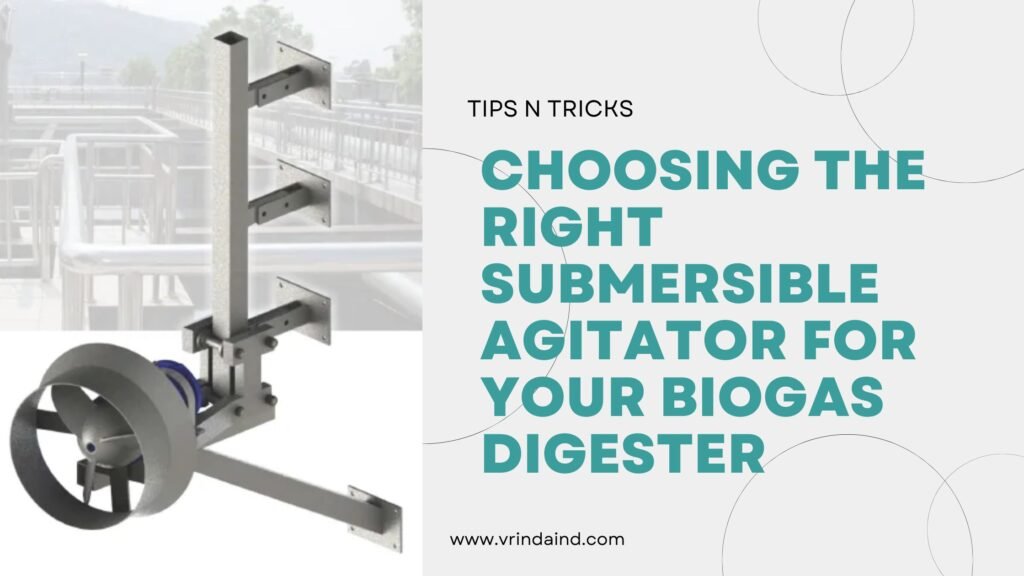
submersible agitators with explosion-proof ratings to precise pumping systems,
every component plays a role in a safe ecosystem. This guide outlines the essential safety protocols every industrial operator must implement.
1. Pressure Management: The First Line of Defense
Anaerobic digesters are sealed environments. If gas production exceeds the consumption rate of your CHP engine or Bio-CNG upgrading unit, internal pressure rises.
-
Pressure Relief Valves (PRVs): Every digester must have a high-quality PRV. In the event of an overpressure or under-pressure (vacuum) scenario, these valves act as a “safety fuse” to protect the tank structure from cracking or collapsing.
-
Monitoring: Continuous digital pressure monitoring allows for automated alerts. This is a critical part of your maintenance schedule to ensure no blockages in the gas lines.
2. Explosion Protection & Flame Arrestors
Methane is highly explosive when mixed with air in specific concentrations (5–15%).
- Flame Arrestors: These are essential safety devices installed in the gas pipeline. If a flame starts at the burner or engine end, the flame arrestor dissipates the heat through a metal mesh, “extinguishing” the fire before it can travel back to the gas storage.
- ATEX Compliance: All electrical equipment inside or near the digester, especially your agitators and mixers, must be ATEX-certified (explosion-proof). This ensures that even if a spark occurs within the motor, it cannot ignite the surrounding gas.
3. Managing Gas Toxicity (H2S)
While methane is the “fuel,” hydrogen sulfide (H2S) is the danger. Even at low concentrations, H2S can be fatal.
- Detection Systems: Fixed gas detectors must be installed at low points around the plant (since H2S is heavier than air).
- Safe Venting: During routine maintenance, proper purging of tanks with nitrogen or fresh air is mandatory before entry to prevent asphyxiation or poisoning.
4. Foaming and Agitation Safety
Sudden “foaming” in the digester can block gas outlets, leading to rapid pressure buildup.
- Agitator Role: Consistent mixing with High Flow Agitators prevents the formation of thick crusts. If a crust forms, gas bubbles get trapped underneath; when the crust eventually breaks, it causes a “gas surge” that can overwhelm safety valves.
- Anti-Foaming Agents: Maintaining a stable biological process is the best safety measure.
5. Double Membrane Gas Holder Safety
Most modern plants utilize a double-membrane gas holder. The outer membrane is kept inflated with air to protect the inner gas-holding membrane from wind and weather.
- Leak Detection: Modern systems use ultrasonic sensors to monitor the gap between membranes, ensuring that any methane leak from the inner bag is detected immediately.
Conclusion: Safety is Profitability
A safe plant is a profitable plant. By investing in high-quality, certified equipment and following a rigorous maintenance plan, you protect your employees, your community, and your financial investment.
Vrinda Industries doesn’t just provide equipment; we provide peace of mind through superior engineering and safety-first design.
Contact the engineering experts at Vrinda Industries today to discuss safety upgrades and certified equipment solutions!