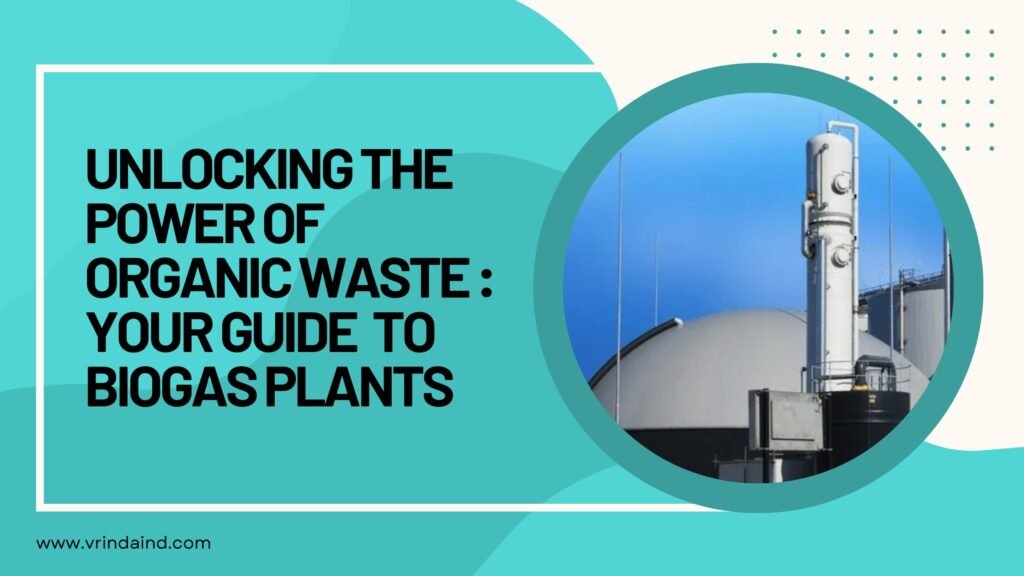

While much of the focus in planning a biogas project is on the digester and mixing, what happens after the gas is produced is just as vital for long-term profitability. Raw biogas is not pure methane; it contains impurities, most notably Hydrogen Sulfide (H2S).
If left untreated, H2S becomes a silent killer for your facility. At Vrinda Industries, we emphasize that a robust gas cleaning strategy is not optional—it is a requirement for protecting your high-performance pumps and expensive power generation units.
Why is H2S Removal Mandatory?
Hydrogen sulfide is highly corrosive and toxic. When biogas is burned in a Combined Heat and Power (CHP) engine without scrubbing:
- Sulfuric Acid Formation: H2S reacts with moisture during combustion to form sulfuric acid (H2SO4), which rapidly eats through engine components, liners, and exhaust systems.
- Oil Degradation: H2S causes engine oil to acidify quickly, requiring more frequent oil changes and increasing your operational maintenance costs.
- Component Failure: Gas valves, sensors, and even the submersible agitator components exposed to the headspace can suffer from accelerated pitting and stress corrosion.
Biological vs. Chemical Scrubbing: A Technical Comparison
Choosing the right H2S removal method depends on your gas flow rate and the concentration of H2S (measured in ppm).
| Feature | Biological Scrubbing | Chemical/Adsorption Scrubbing |
|---|---|---|
| Mechanism | Thiobacillus bacteria consume H2S | Iron sponge or activated carbon |
| Operating Cost | Very Low (needs air & nutrients) | Higher (media needs replacement) |
| H2S Inlet Levels | Handles high concentrations (>2000 ppm) | Best for polishing low-mid levels |
| Maintenance | Requires biological monitoring | Simple media swap-out |
| Footprint | Larger tower/tank required | Compact vessels |
1. Biological Desulfurization (The In-Situ Method)
This is often the most cost-effective solution for industrial plants. By injecting a small, controlled amount of air into the digester headspace, naturally occurring bacteria oxidize the H2S into elemental sulfur.
Pro Tip: To maximize the efficiency of biological desulfurization, your high flow agitators must maintain a stable surface area in the slurry to allow for proper gas-liquid interface.
2. External Scrubber Towers
For plants with very high H2S levels or those aiming for Bio-CNG grade gas, an external scrubber is used. These towers use either a chemical wash or a dry media (like iron oxide pellets) to “scrub” the gas as it passes through.
This ensures that the gas reaching your equipment meets the strict parts-per-million (ppm) limits required by engine manufacturers—usually <200 ppm for standard CHP units.
The Impact on Your ROI
Investing in a high-quality gas cleaning system directly improves your economic benefits. By reducing H2S:
- You extend the interval between major engine overhauls from 10,000 hours to 30,000+ hours.
- You prevent unplanned downtime, ensuring you are always generating electricity or heat.
- You significantly reduce your carbon footprint by ensuring efficient, clean combustion with minimal harmful emissions.
Conclusion: Engineering for Longevity
At Vrinda Industries, we believe that a biogas plant is only as good as the gas it produces. By integrating advanced H2S scrubbing technology with our durable digestate separators and mixing systems, you create a facility that is both environmentally sound and mechanically resilient.

Contact the engineering team at Vrinda Industries today to evaluate your gas cleaning requirements and get a custom scrubber solution!